Learning to Live from Termites?
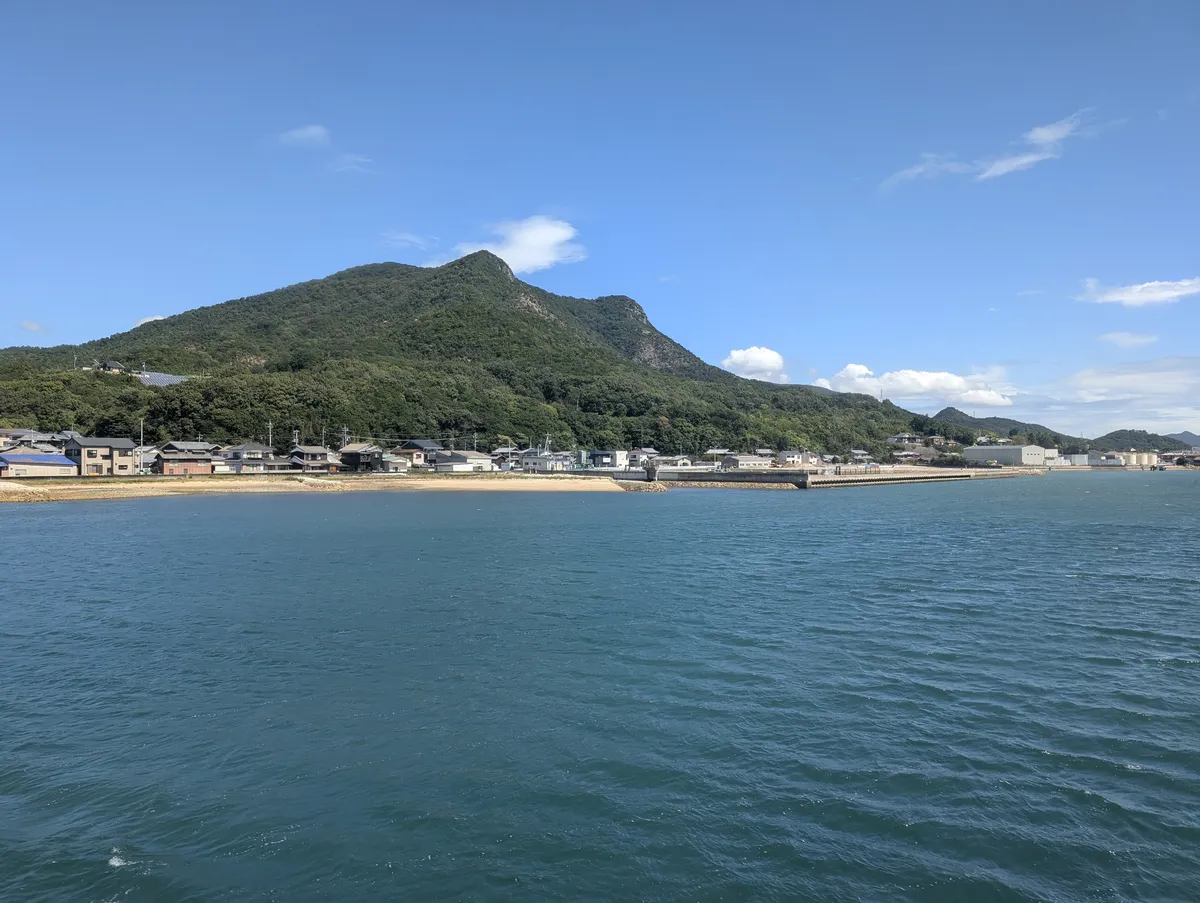
Last September I received an invitation from an old friend, James Jack (affectionately known as JJ) to visit his studio on Shodoshima Island. Shodoshima is the second-largest island in the Seto Inland Sea region, which is nationally recognised as Japan's only olive-growing area. This was not the first time I had set foot on this island of 30,000 people. In 2019, I visited in order to see the triennial Setouchi Triennale exhibition. But at that time, I didn't have much time to look around thoroughly - my activities were limited to visiting exhibition sites, so I wasn't too interested in visiting again. It's actually not too far from where I live in Yamaguchi. However, due to the limited public transportation between the two cities, it took me about 4 hours to reach Tonosho Port. This made it quite difficult for me to find the right time to come and stay there for a few days.
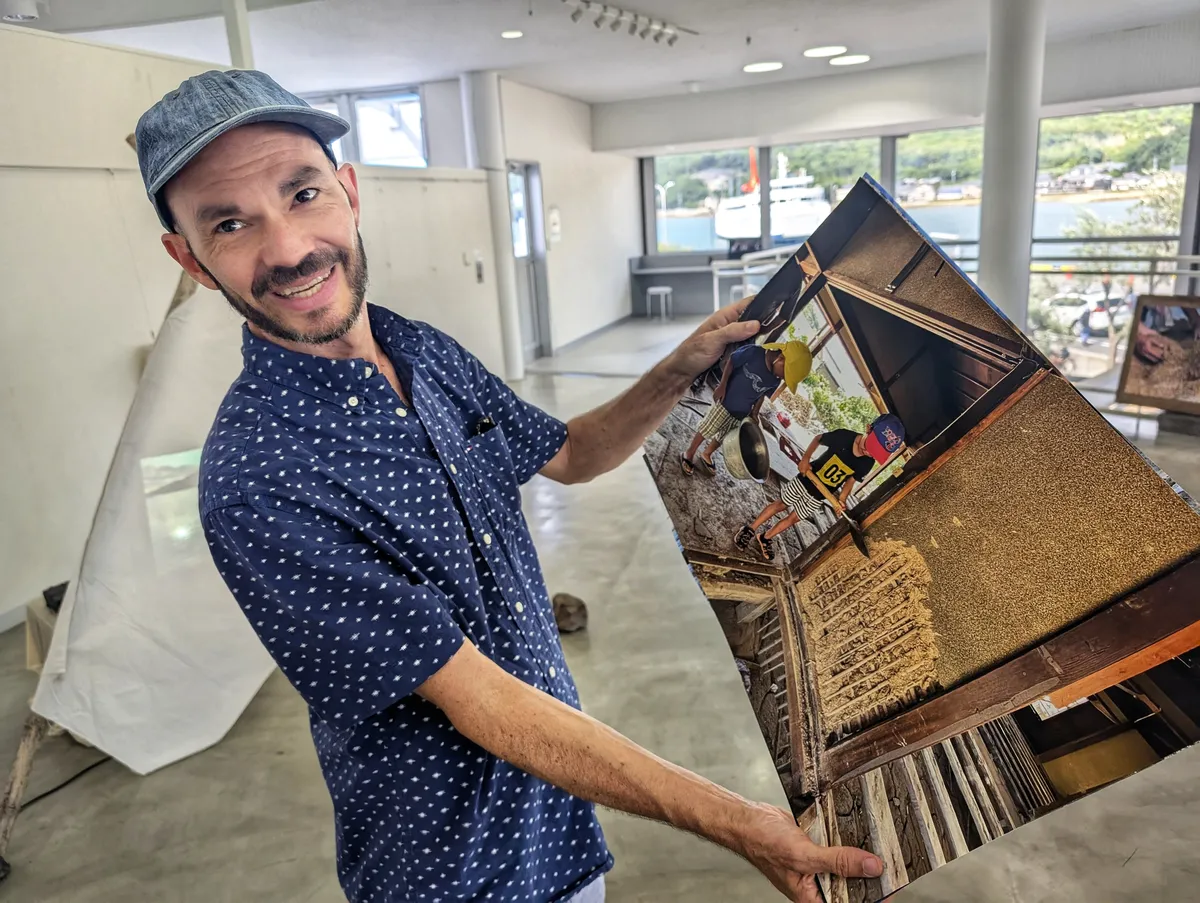 JJ and I have known each other since 2016, when we met through our mutual friends. I had helped JJ to make an exhibition presentation in Jakarta, but unfortunately, due to funding and time constraints, we cancelled the project. A few years later, when I moved to Yamaguchi, JJ contacted me several times to meet again, but after COVID-19 broke out and nationwide travel restrictions were put in place, I was unable to visit Shodoshima.
JJ's offer came again via text message in early May 2024. He told me about his activities in Shodoshima over the past few years and how he planned to continue the Lumbung spirit of Documenta 15 (JJ and his studio were among the artists who participated in several programs at Documenta 15). JJ then offered that I would be interested in coming to see his new activities at his Termites Studio and staying for 2 nights.
Around the time of my visit, JJ was working on a joint exhibition with Termites Studio and his students from Waseda University. So, while visiting the island, JJ asked me to check out the exhibition and discuss his students' work, offering feedback and background on the works they were making. At the end of the message, he also told me that he would take me on a sailing boat tour of the Seto Inland Sea.
Personally, I'm interested in learning more about Termites Studio because I'm working on a small research project about community-based art work practices in Japan. I imagine Termites Studio could be one of the references that I could share with my fellow researchers in the project.
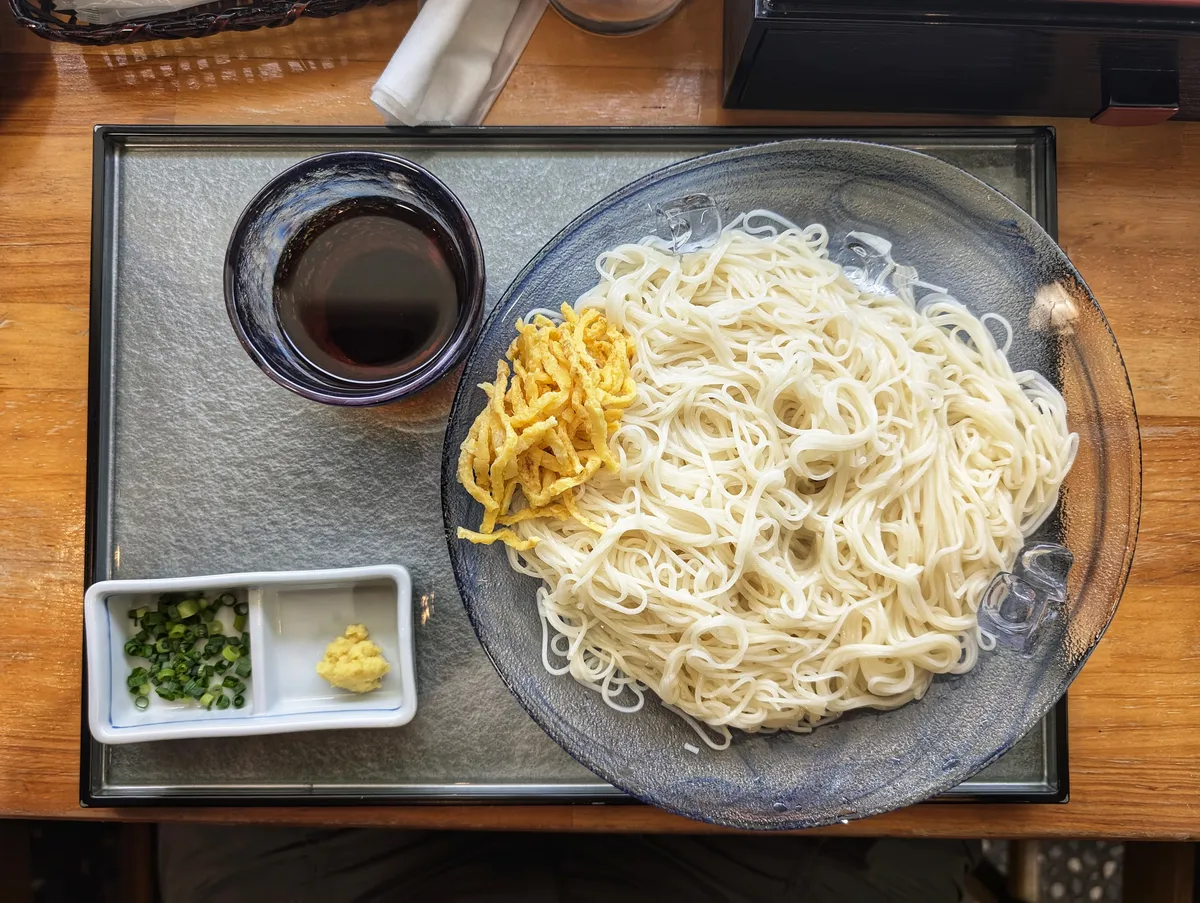
September may not be the ideal time to visit Japan's islands. The warm and humid summer temperatures can be overwhelming. But as a “former” Southeast Asian, this kind of weather is no big deal. On the first day I arrived on the island, at 12:00, I was greeted by JJ and his friend Elica Masuya, an artist/researcher in residence at Termites Studio. We chatted about the project they were working on together while enjoying a fresh, cold somen.
Besides being known as an olive producer, the island of Shodoshima is one of three places in Japan famous for somen noodles, and the island has more than 400 years of experience. Production flourished through the bustling maritime trade, which made ingredients readily available, as well as the nearby abundance of salt and water for making the noodles. Interestingly, the usual somen dipping sauce is just dashi and shoyu; this time, it is combined with garlic-infused olive oil. The flavour becomes similar to pasta.
After lunch, I was taken to see the exhibition venue, which turned out to be the former information and ticketing centre at Tonosho port. The building, with its basic circular architectural form, looks quite “new”. JJ told me that the building is currently being sought for a new function as an art appreciation space and community gathering point. It was inside the building that JJ organised the exhibition with his colleagues and students. On the ground floor, a fairly large screen, perhaps five meters wide, is the main installation. If you look closely, there are traces of stitching that form unfinished letters (and possibly words or sentences). JJ told me that it was a collaborative work with a friend who produces sail threads. There were several different ones used to form the visuals on the screen, and although they were both brown, their colour intensity looked different. I later learned that they used natural dyes taken from around Shodoshima.
On the second floor, the atmosphere of the group exhibition was more pronounced, and I appreciated several works. An archival installation by Termites Studio is in the centre of the room, on the left. Elica Masuya displays a video installation in a simple tent supported by three logs. The video shows a woman sailing in a canoe. In the farther corners of the room were works by JJ students. I was quite surprised when I spoke with them and learned that this was their first attempt at making art. Honestly, the works they displayed had decent conceptual and visual weight. I then gave them practical advice focused on presenting the work. I didn't want to talk too much and give advice on their process. I think it's important to give them space to explore and make mistakes as part of the learning process. My only regret is that my Japanese skills are still very basic, so I can't speak fluently with them. We then ended the day by briefly driving around parts of Shodoshima in JJ's tiny electric car (there aren't many electric cars on the island, so the battery recharge price is still quite cheap). My final ride of the day was at Termites Studio.
While explaining the essential functions of my residency house, JJ also outlined the project's idea. According to him, Termites Studio is an artistic endeavour exploring the interconnectedness between humans and nature, primarily through termite behaviour and their symbiotic relationship with their environment. The studio is founded and run by artists James Jack and Masashi Echigo in collaboration with individuals from various fields, including Sanae Imagawa (Cosmic Organic Farm), Shūho Jishi (Seikenji Children's Centre), and Shintarō Miyawaki (Thoreau Café). The Termites Studio aims to promote understanding and appreciation of ecological processes by drawing inspiration from termite colonies and their symbiotic relationship with microbes that help them digest wood. When I visited, JJ said there were already several programs underway, including workshops on studying termites and making miso, as well as a program inviting children around the Studio to decorate a small, multifunctional cart.
On the second day, JJ informed us that our sailing plans had to be cancelled due to bad weather - indeed, the wind was extreme. So we changed our plans to have a BBQ party in the evening with some friends. JJ then took me on a tour of some interesting places around Shodoshima. He told me that Shodoshima is very popular as a tourist destination, partly because of the famous movie “Twenty-Four Eyes,” based on a novel by local author Sakae Tsuboi, which tells the story of the struggle to live and find peace after the war. It was information like this that increased my curiosity about Shodoshima.
However, Shodoshima is inevitably suffering from one of Japan's major problems: depopulation. Tourism is certainly different from that of residents, and I would likely have a different attitude towards Shodoshima if I lived there. JJ's efforts with the community in Shodoshima are an interesting example of how small projects rooted in local values can be a tool for building community sustainability. Termites Studio reminds me of ruangrupa's collective work model from 2000 to 2015 that utilised residential houses and transformed them into public spaces. While JJ drew inspiration from termites, ruangrupa drew inspiration from bees. Both work collectively to build a sustainable ecosystem.
This practice of community building through creative endeavours must, of course, be done slowly and over a long period of time. It would be unfair to compare it to a tourism project, which merely attracts visitor value and creates momentary economic fluctuations. I imagine that, like a swarm of termites, the work done by JJ and friends through Termites Studio can slowly change Shodoshima's social structure. As the Indonesian saying goes, little by little becomes a hill.